

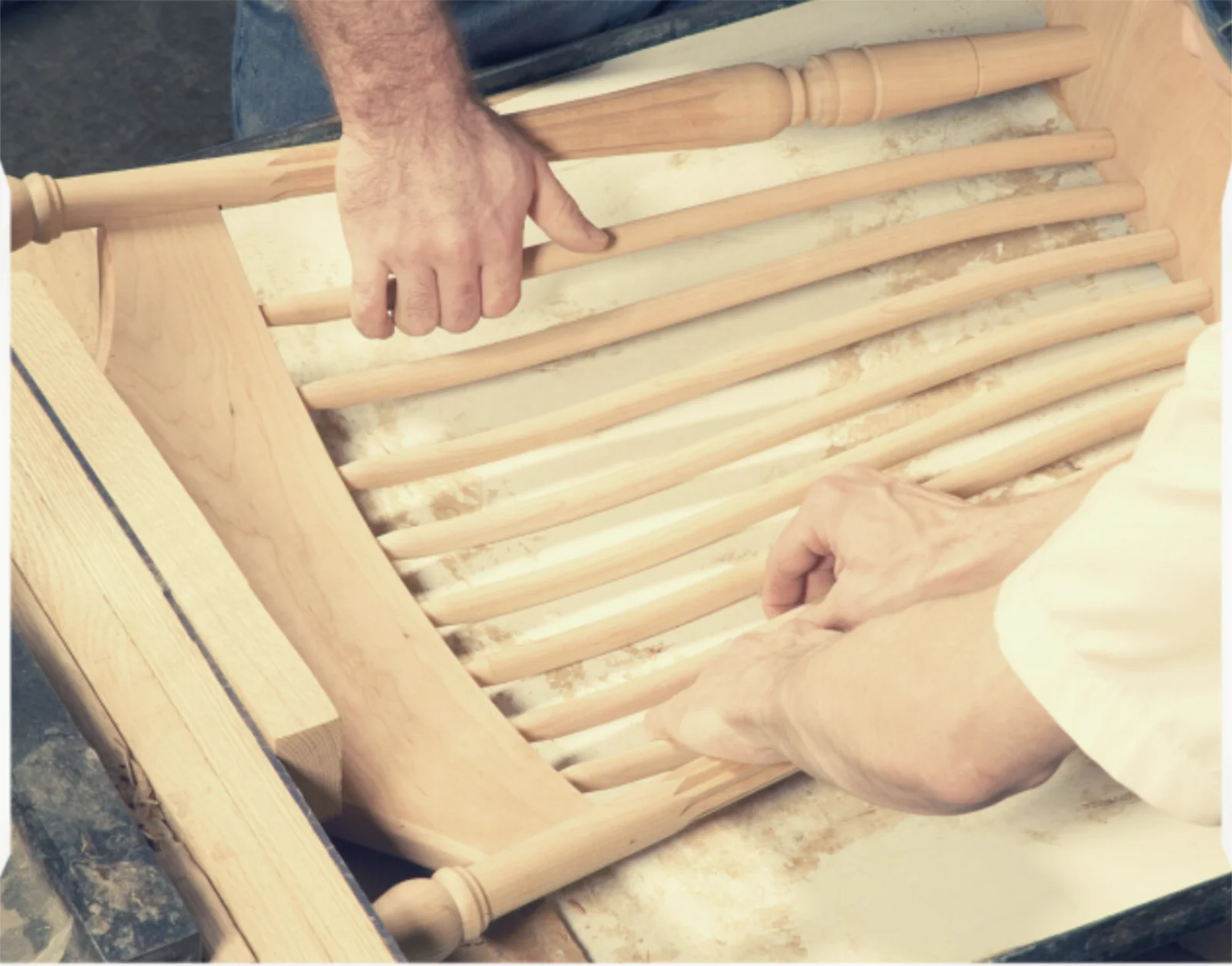
We'll cut to the chase: quality Amish furniture isn't cheap, especially when compared to mass-produced alternatives that use subpar materials. So, as you browse our online store or visit a local market, you may find yourself wondering why is Amish Furniture so expensive? Is it worth the cost?
How Much Does Quality Amish Furniture Typically Cost?
High-quality Amish furniture covers a full range of price points. To help give you an idea of what to expect:
- Most Amish dining room tables cost between $2,000 to $6,000 with some reaching $10,000.
- Amish hutches typically span from $3,000 to $10,000 with some costing up to $14,000.
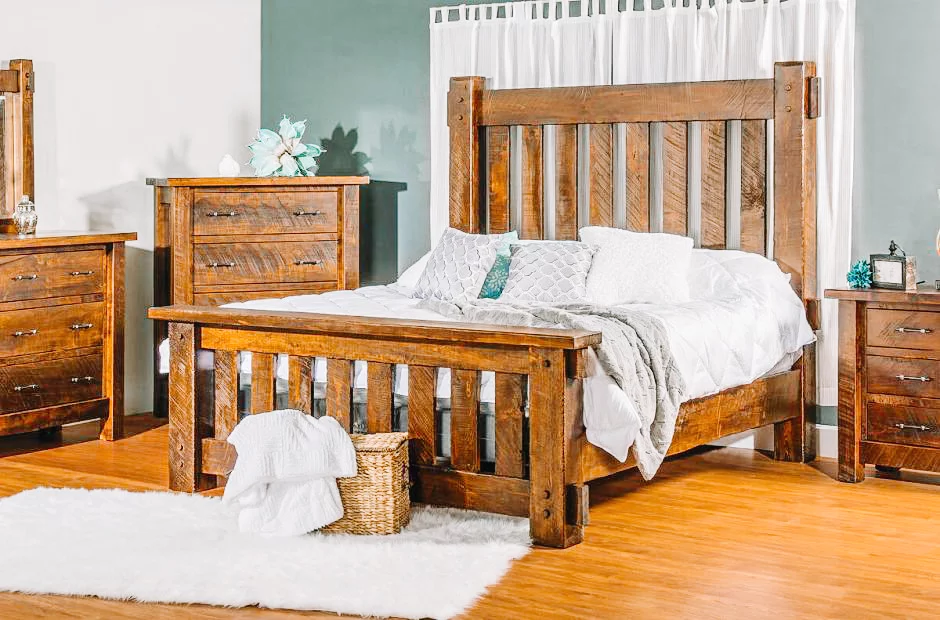
- Amish bed frames can cost $1,000 to $6,000, though some can climb as high as $15,000 depending on the size, materials, and style of bed frame.
- An Amish coffee table can range from $800 - $2,000, though some with intricate designs or higher-end hardwoods can go for as expensive as $3,500.
- Large Amish desks tend to cost between $3,000 - $13,000 with some nearing $20,000. The large range reflects the diversity in size and shape, add-on features like hutches, and the use of specific hardwoods.
- Most Amish-made sofas will cost between $3,500 - $5,000. However, larger pieces like the Haleyville Reclining Sectional can cost $7,663 or greater due to its tremendous size.
So, now that you know what type of expense to anticipate when shopping for Amish pieces, it's time for us to answer the real question looming in your mind: is the furniture actually worth the cost?
Why Amish Furniture Can Be Expensive
The price of a furniture piece can be classified in two ways: the materials and the labor, (topics we explore further in our article How Much Does a Wooden Dining Room Table Cost). To understand the cost of Amish furniture, it's crucial to understand:
- Authentic Amish furniture uses real hardwood sourced from North America - the choice of materials is arguably one of the biggest determinants in the cost of the individual piece, as the specific wood species run the gamut from relatively affordable oak to lavish walnut. Regardless, the use of ethically sourced hardwood will always make a piece more expensive than if it uses flimsier alternatives like veneer or engineered wood. Importantly, the Amish's standards for quality extend to other materials as well, from the choice of varnish to the use of real leather. This too can lead to higher costs compared to cheaper textiles.
- Amish furniture makers are celebrated woodworkers - Amish craftsmen don't use electricity, meaning that each furniture piece is the byproduct of incredible time and effort, which reflects in the cost. They utilize woodworking techniques inherited from past generations and perfected over the centuries, and pay close attention to the details at every step of the build. In turn, the produced furniture is both beautiful and sturdy.
- Amish furniture is often custom-made - Because each Amish furniture piece is made individually, it can be customized for a customer's particular needs. This freedom to choose can impact the timber and stain, and even the dimensions and special features.
Woodworking Techniques Worth the Extra Cost
- Mortise & tenon joinery - the "bread and butter" of elite Amish furniture making, this technique combines two pieces of wood by creating a slot or pocket in the one and a correlating projecting piece in the other. The woodworker then slides the "tenon" into the "mortice" for an unparalleled joint. Similar to this style is the Tongue & groove joint, though the shape and positioning of the tongue and slot differ.
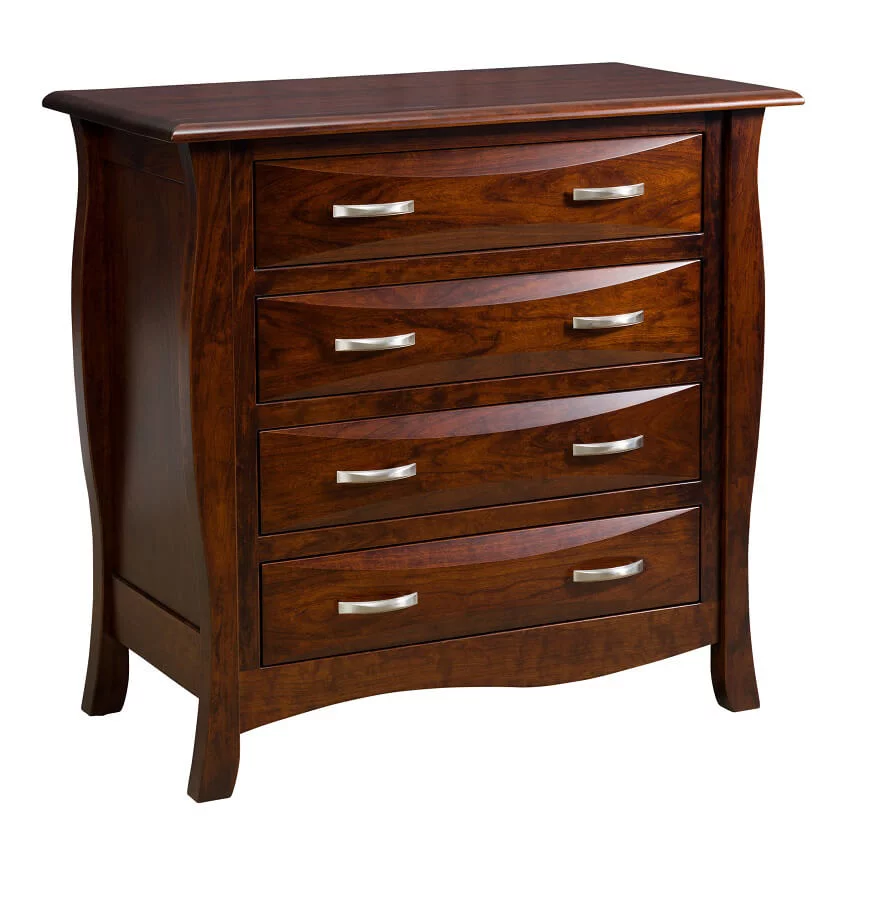
- Dovetailed joints - two pieces tightly interlock at a right-angle to yield first-rate durability. Most commonly used with drawers.
- Steam bending - Amish woodworkers use steam bending to curve hardwood, enabling unique, elegant designs.
- Hand carving - Amish woodworkers showcase their artistic skills by creating unique patterns and details on various furniture pieces.
- Hand sanding - Hand sanding ensures a smooth and even texture, enhancing the natural beauty of the wood. Amish craftsmen devote considerable time to hand-sanding, achieving a polished and refined surface that makes the furniture well worth the expense.
- Hand-rubbed finishes - Rather than using mechanical methods, Amish woodworkers prefer hand-rubbed finishes. This involves applying stains, oils, or varnishes by hand, allowing for precise control over the finish and highlighting the natural characteristics of the wood.
- Breadboard ends - Breadboard ends are perpendicular pieces of wood attached to the ends of a tabletop to keep the surface flat and prevent warping over time. Executing them correctly requires careful joinery that allows the main panel to expand and contract naturally with the seasons while the breadboard holds its shape.
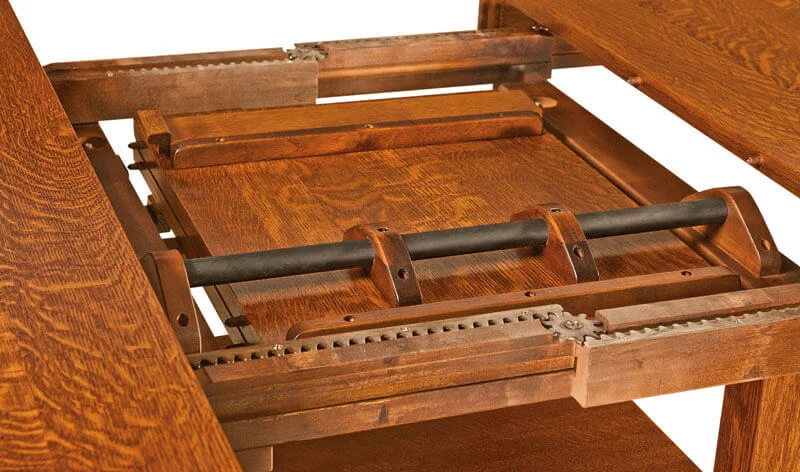
- Butterfly leaf mechanisms - In lesser-built furniture, butterfly mechanisms can be a frustrating experience that is stiff to operate or misaligned when extended. When the craftsmanship is right, the two leaf halves fold out from beneath the tabletop in a single smooth, swift motion that requires no separate storage and no second set of hands. True Amish furniture makers have mastered such complexities.
Understanding Wood Choices and How They Affect Expense
The species of hardwood used in a piece of Amish furniture is one of the single biggest drivers of its cost, often more impactful than size or style alone. Solid hardwood will always cost more than engineered wood, MDF, or softwoods like pine, simply because it's denser, more durable, and more difficult to work with.
But even within the hardwood category, prices vary considerably depending on how abundant the wood is, how it mills, and how much it's prized for its appearance.
- Red Oak - Red oak is the workhorse of Amish furniture and the most budget-friendly solid hardwood option. It's widely available across North America, mills cleanly, and takes stain beautifully.
- Brown Maple - Brown Maple sits in a comfortable lower-to-middle range, offering a smooth, fine-grained surface that accepts paint and stain more uniformly than oak. It's slightly softer than hard maple but still highly durable, and its subtle variation in tone gives finished pieces a warm, natural character.
- Cherry - Cherry is where you begin to see your Amish furniture become more expensive. It's prized for its rich, reddish-brown color that deepens and grows more beautiful with age. Cherry is moderately hard, works well with hand tools, and carries an heirloom quality.
- White Oak - White oak has surged in popularity in recent years, largely thanks to its appearance in high-end interior design and its association with Scandinavian and contemporary styles. It shares the durability of red oak but has a finer, more linear grain and a cooler, ashier tone that pairs beautifully with modern and minimalist aesthetics.
- Tiger Maple - Tiger maple refers to hard maple with a distinctive "figuring" that appears as rippled, wavy patterns. Because this figuring occurs naturally and somewhat unpredictably, tiger maple is harder to source and commands a higher price than other Amish furniture materials.
- Walnut - Walnut is the crown jewel of Amish hardwood furniture. Its deep, chocolatey brown tones and straight, dramatic grain give it an unmistakable richness that photographs well and ages even better. Walnut is also slower-growing and less abundant than species like oak, which makes it significantly more expensive.
Other Amish Furniture Benefits That Make it Worth the Expense
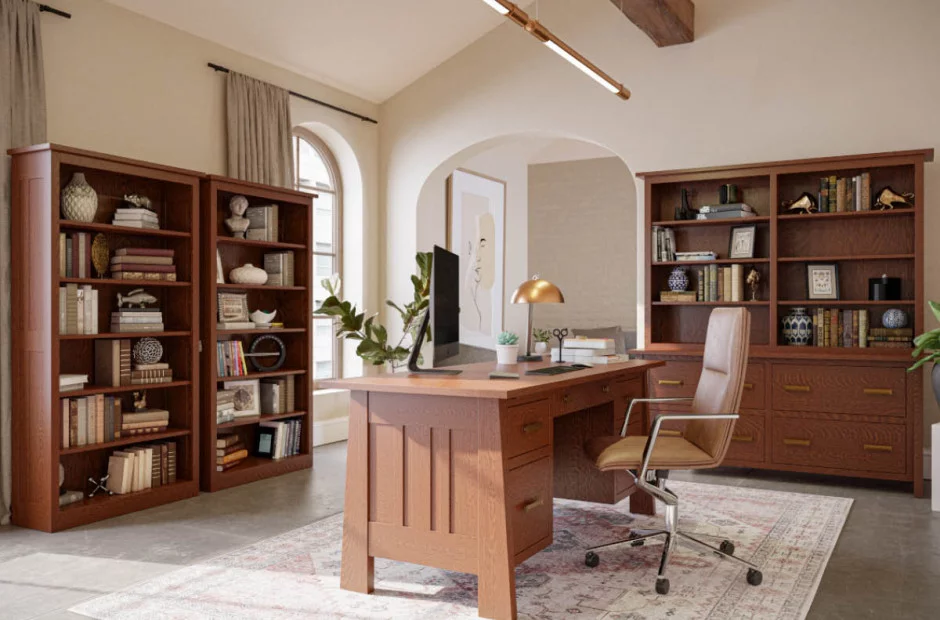
- You can customize your order with Countryside Amish Furniture - One of the benefits of buying furniture that is made by artisans rather than machines is that you can dictate the specifications. For example, all furniture we sell comes in your choice of hardwood and stain. You can even dictate select details, from the knob design to added hutches or decorative enhancements.
- Genuine Amish furniture is made in the USA - When you buy real wood furniture made in the USA, you're more likely to be supporting fair labor wages, safe work environments, responsibly harvested resources, and the reduced use of harmful chemicals. On the flipside, it's worth acknowledging that many companies who choose to operate in developing countries do so in order to exploit loopholes that enable lower manufacturing costs. While it may result in furniture that is less expensive, everyone suffers, from the workers to the end users.
- Amish furniture is free of the harmful chemicals commonly found in mass-produced alternatives - Many budget furniture options are made with engineered wood products that off-gas formaldehyde and other volatile organic compounds (VOCs) over time. Solid hardwood furniture built with quality finishes doesn't carry the same concern, making it the healthier choice for your family; this alone makes Amish furniture well worth the expense.
Amish Furniture Can Serve as a Smart Long-Term Investment
There's no arguing that Amish furniture will never have the same low costs as what you'll find at Ikea. However, think about how often such pieces scuff and break, needing to be replaced every few years. Comparatively, Amish furniture is meant to last a lifetime, thanks to its usage of solid wood and advanced woodworking.
So while the upfront cost of Amish furniture may seem high, it's a one-time purchase rather than one you'll need to repeat.
Ready to Buy Amish Furniture? Browse Our Online Store
We offer Amish furniture for every room of the house spanning a broad range of price points. Choose the design you like, select the wood and finish (or order samples in advance), and our Amish furniture makers will get to work building the piece. Have questions about shipping costs, customization options, or our online selection? Our USA-based team is here to help.
Frequently Asked Questions About Amish Furniture Cost
Does the cost change if I want a painted finish versus a stained one?
With Countryside Amish Furniture, most stains are included in the price of the furniture, though certain premium stains and painted finishes carry a 20% upcharge. Browsing the full stain and finish options before finalizing your order is a good way to understand how your finish choice will affect the final price.
Two-tone staining, where two different stains are applied to different parts of the same piece, will also add to your Amish furniture's cost since it requires more time and precision to execute cleanly.
Does the weight of solid wood furniture make it more expensive to deliver?
Delivery pricing is one area that varies considerably from one Amish furniture retailer to the next. Yes, solid hardwood furniture is significantly heavier than mass-market alternatives, and some retailers pass that cost along through weight-based or distance-based delivery fees that can add up quickly on a large order.
However, Countryside Amish Furniture charges a flat rate of $150 for the entire order regardless of size or destination, which includes white glove delivery and setup. For most buyers, that comes in well below what other online furniture retailers charge for the same service.